
Industry information
Company News
- Aluminum veneer customization, creating the art of personalized space
- The wonderful world of aluminum honeycomb panels: the perfect combination of lightness and strength
- Honeycomb aluminum plate: a mysterious veil of lightweight and sturdy
- Aluminum veneer: the fashionable choice of modern architecture, revealing its charm!
- Unveiling the "lightweight" mystery of aluminum honeycomb panels, a new choice for home decoration!
Industry dynamics
- Aluminum veneer manufacturers make your building stand out from the crowd
- Aluminum veneer: the beauty of architecture, the choice of details
- The innovative charm of aluminum honeycomb panel: the mysterious veil of lightweight and firm
- Quality assurance for customized aluminum veneer, strict quality standards to create excellent quality
- The secret of aluminum honeycomb panel: the perfect combination of lightweight and sturdy
Frequently asked questions
- How can aluminum veneer improve the appearance of buildings?
- Can aluminum veneer achieve customized design?
- How does the plasticity of aluminum veneer affect building comfort?
- Can the insulation function of aluminum veneer solve the structural problems of buildings?
- Has the production process of aluminum veneer reduced energy consumption?
contact us
Mobile:+86 15627778610
Email: 2201229786
Address: No. 5 Binjiang Road, High tech Zone, Zhaoqing City, Guangdong Province
Aluminum veneer: enhancing the insulation performance of building exterior walls
- Author: Lesilong Technology (Guangdong) Co., Ltd
- Release time: 2022-02-26 04:27:57
- Click:0
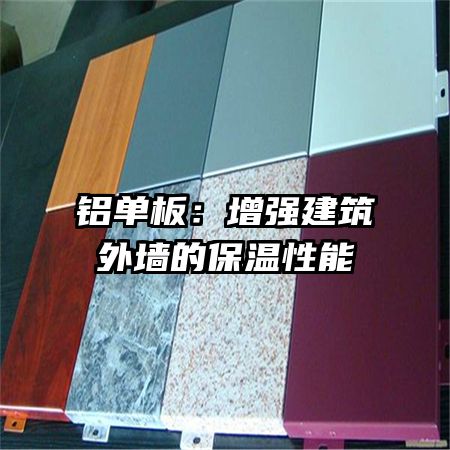
Aluminum veneerEnhance the insulation performance of building exterior walls
Abstract: With the increasing attention to building energy-saving performance, aluminum veneer, as a new type of building material, has gradually been widely used. This article will elaborate on how aluminum veneer enhances the insulation performance of building exterior walls from four aspects, including thermal conductivity, insulation layer, waterproof performance, and sustainability.
1、 Thermal conductivity coefficient
1. The thermal conductivity coefficient is an important indicator for measuring the thermal conductivity of materials. Aluminum veneer, due to its low thermal conductivity, can effectively reduce heat conduction and improve the insulation performance of building exterior walls. Research has shown that the thermal conductivity of aluminum veneer is much lower than traditional building materials such as bricks and concrete.
2. By using aluminum veneer as the exterior wall material, the heat inside the building is not easily dissipated, thereby reducing the energy consumption of heating and air conditioning. This not only helps to save energy and reduce carbon emissions, but also lowers the operating costs of buildings.
3. Therefore, the low thermal conductivity of aluminum veneer is one of the important factors in enhancing the insulation performance of building exterior walls.
2、 Insulation layer
1. Aluminum veneer can be combined with insulation materials to form an effective insulation layer. The insulation layer can prevent heat transfer and improve the insulation performance of building exterior walls.
2. Common insulation materials include polystyrene board, rock wool board, and glass wool board. These materials have good thermal insulation properties and can form a stable insulation system when combined with aluminum veneer.
3. By selecting and installing insulation materials reasonably, aluminum veneer can provide excellent insulation effect while maintaining the overall beauty of the building's exterior walls.
3、 Waterproof performance
1. Aluminum veneer has excellent waterproof performance and can effectively prevent rainwater from penetrating into the interior of buildings. This is crucial for protecting the insulation performance of building exterior walls.
2. Traditional building exterior wall materials such as bricks and concrete are prone to moisture erosion when exposed to wind and rain for a long time, leading to a decrease in the performance of the insulation layer. As a metal material, aluminum veneer has good weather resistance and waterproof performance.
3. The waterproof treatment of aluminum veneer can effectively extend the service life of building exterior walls and improve the durability of insulation effect.
4、 Sustainability
1. Aluminum veneer has good sustainability and meets the requirements of modern architecture for environmental protection and sustainable development.
2. Aluminum veneer can be recycled, reducing resource consumption and environmental pollution. Meanwhile, the production process of aluminum veneer consumes relatively less energy, which also helps to reduce carbon emissions.
3. Therefore, as a sustainable building exterior material, aluminum veneer can not only enhance the insulation performance of buildings, but also promote the development of the construction industry towards a more environmentally friendly and sustainable direction.
5、 Summary:
In summary, aluminum veneer, as a new type of building material, has significant advantages in enhancing the insulation performance of building exterior walls. Its low thermal conductivity, combination with insulation materials, excellent waterproof performance, and good sustainability make aluminum veneer an ideal choice in modern architecture. With the continuous improvement of people's requirements for building energy-saving performance, aluminum veneer will be more widely used in the future.
 Customer service QQ